
Copper Salvation?
Not so fast...

A Canadian company has floated a plan to reopen the San Manuel copper mine more than 20 years after it closed northeast of Tucson, the Arizona Daily Star reported two weeks ago.
If you’re not following the news here are five takeaways:
The mine in San Manuel once ranked as one of the largest underground copper operations in the world before Australia mining giant BHP acquired it in 1996 and shut it down in 1999.
Officials from British Columbia-based Faraday Copper said they hope to acquire the mine from BHP and “re-start mining activities on the property.”
The two companies have signed a non-binding agreement to explore transferring ownership of San Manuel and reopening it as part of a larger effort to create a “multi-generational copper district” in southeastern Pinal County.
Faraday is also hoping to develop the Copper Creek Project, a major new open-pit and underground mine in the Galiuro Mountains, about 15 miles from the San Manuel Mine.
Conservationists and some nearby residents warn that the combined mining projects could drain the San Pedro River and Aravaipa Creek, destroying critical riparian habitats and natural areas previously set aside as mitigation for industrial development elsewhere in Arizona
************
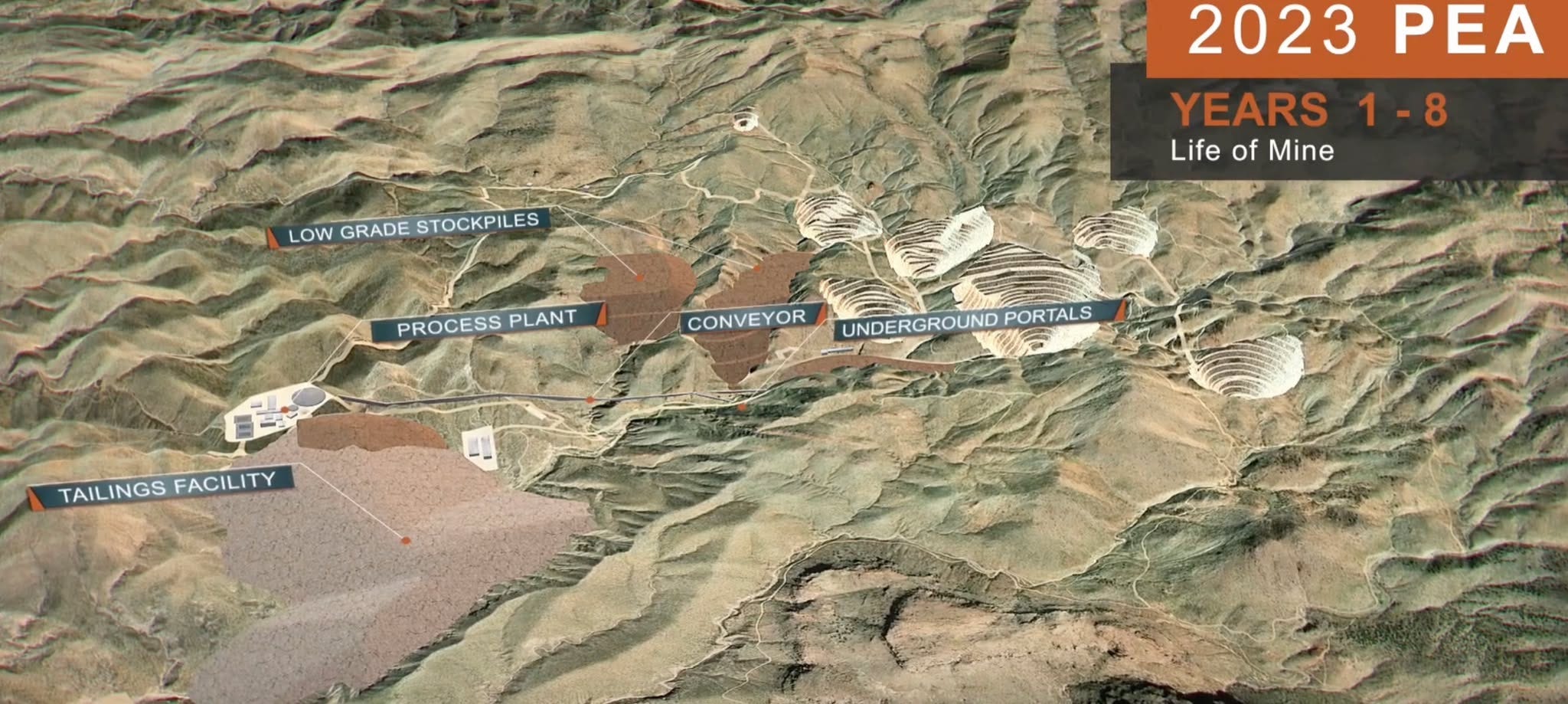
What are we to make of this?
We aren’t alone. Our “sister community”, Patagonia, is also struggling with a Big Mining project (South 32). Their experience testifies to the consequences of mining for depletion and poisoning of water in our high desert communities.
“Last week, the town council of Patagonia, the city of Nogales and Santa Cruz County Board of Supervisors each approved an early-action community funding agreement with South32, with the company agreeing to spend $4 million to expand critical services, infrastructure and more. Many locals consider this a community “bribe” … or worse.
The agreement is part of a larger process between the entities to enter a legally-binding Community Protection and Benefits Agreement, which will be crucial to securing further protections and funding for the community.” Source here.
**********
There’s been a boomlet of local reaction on community Facebook pages that includes some rah, rah… “Mine, baby, mine!”. And there’s plenty of skepticism that the deal is for real. Many believe that Faraday’s scheme if it came to pass would be an environmental disaster at the same time crippling our economic prospects by failing to negotiate mitigations for the benefit of San Manuel and Mammoth (and Oracle).
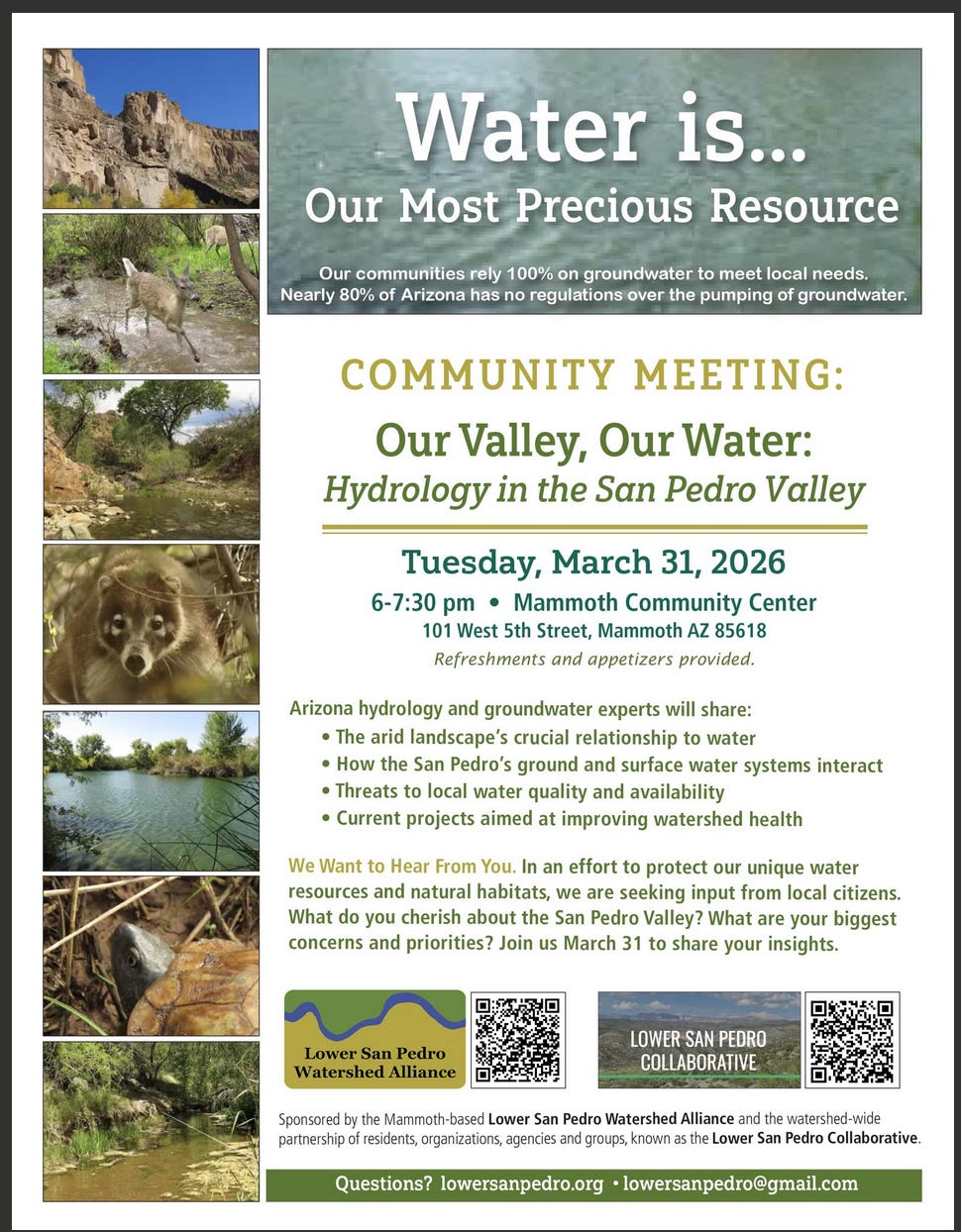
The upcoming event in Mammoth looks important for those of us who want to know more about our local scene.
****************
One thing we know for sure: unless the Tri-Community gets better organized we’ll have little influence and therefor little opportunity to negotiate for local protections and benefits.
****************
Since it’s a given that Canadian and Australian mining big shots don’t give a shit about towns like ours, local touts for Big Copper might want to ask some hard questions like: What will happen to the infrastructure of schools, non-profits, and the business districts in San Manuel even as international capital decides whether or not to re-enter the scene (or pull a financial bait and switch to the benefit of their bottom lines); What kind of jobs are they talking about? What are the skill requirements for those jobs? If the project comes to pass what are the environmental consequences? Will a mine based economy create more jobs than one based elsewhere, for example, in tourism or health care? Of course that’s all speculation because nobody knows the answer.
**********
**********
There are plenty of cautionary stories out there written in the blood of communities involved with Big Copper. The thriving little town of Sonora, AZ was literally blown up when ASARCO (now owned by Grupo Mexico) expanded the open pit and bulldozed the town and vibrant community of Sonora in the process.
Until BHP took the reins Magma was run mostly by locals. That was a huge positive for the Tri-Community. We all know what Australia based BHP did to our profitable company after it took over the mine, mill, smelter, railroad, townsite and surrounding land. If the Faraday scheme materializes (all or in part) BHP’s participation is one of the big red flags.
******
In the old Magma days unions anchored wage, health care, retirement and other benefits. Union-won benefits are still echoing through Oracle, San Manuel, and Mammoth.
Magma paid well but Magma had strong unions going for it.
Is Faraday/BHP open to union organizing? You kidding?
As always - informed, well argued, and raises the important questions.
Thanks for the information and notification of the San Pedro River Watershed in Mammoth. It's much appreciated Frank!